
The Great Migration in Tanzania stands as one of the most breathtaking wildlife events on Earth. Every year, over two million wildebeest, zebras, and gazelles move across the vast plains of the Serengeti in search of fresh grazing and water. This continuous journey creates a dramatic cycle of life, survival, and renewal that draws travelers from all over the world.
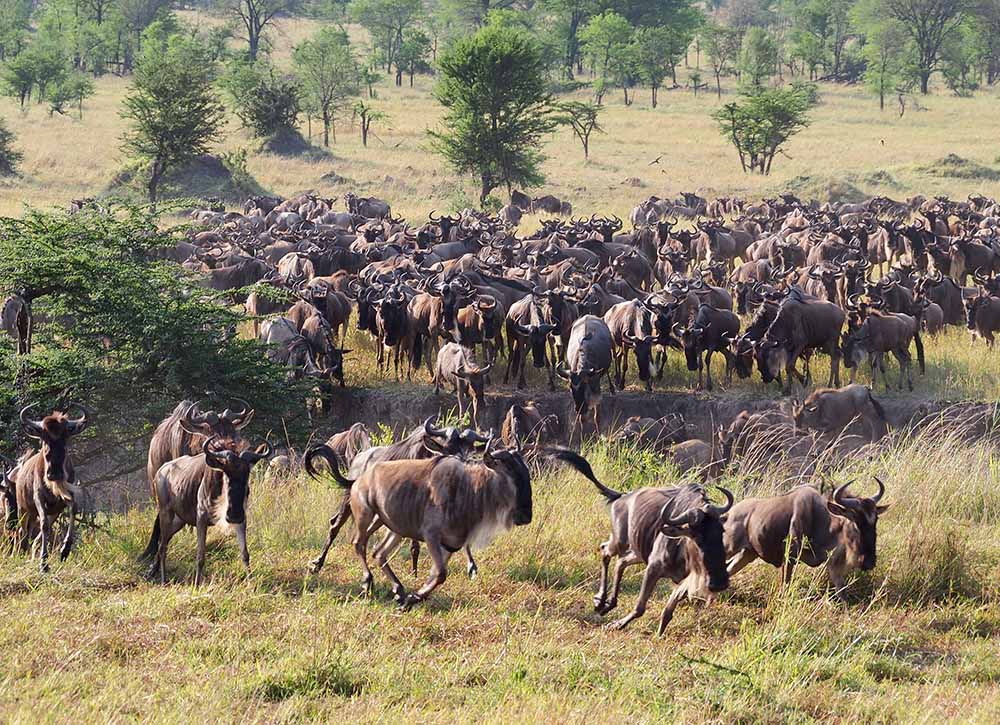
Primarily, rainfall patterns guide the movement of the herds. As the seasons change, animals follow the growth of new grass across the ecosystem. During the short rains, the southern Serengeti becomes a lush feeding ground. Consequently, thousands of calves arrive between January and March, which makes this period ideal for witnessing new life in the wild.
However, the abundance of prey also attracts predators. Lions, cheetahs, and hyenas closely follow the herds, creating intense wildlife encounters. As a result, visitors often experience dramatic scenes of pursuit and survival during this time.
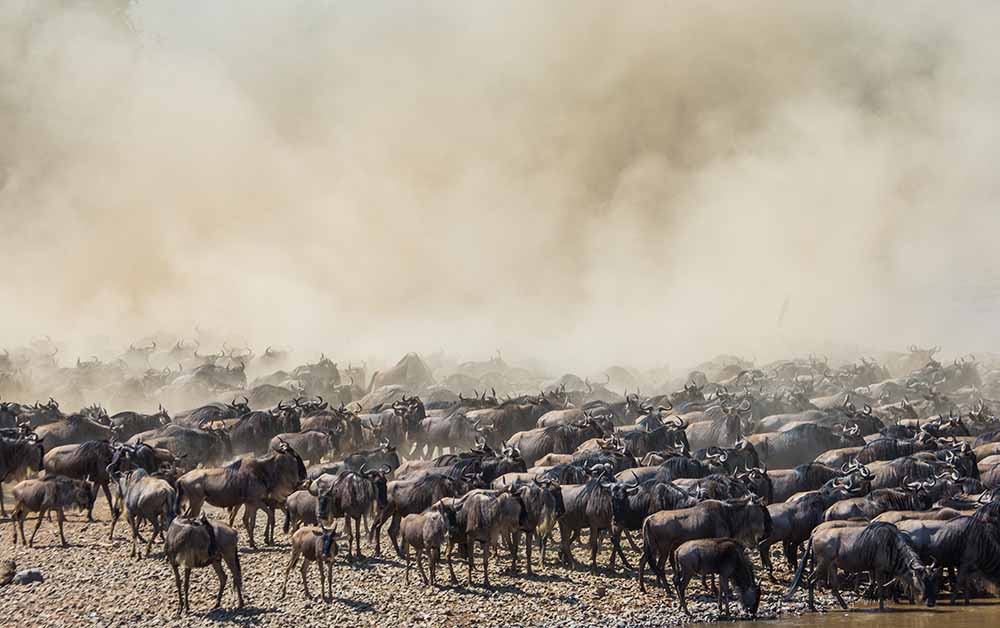
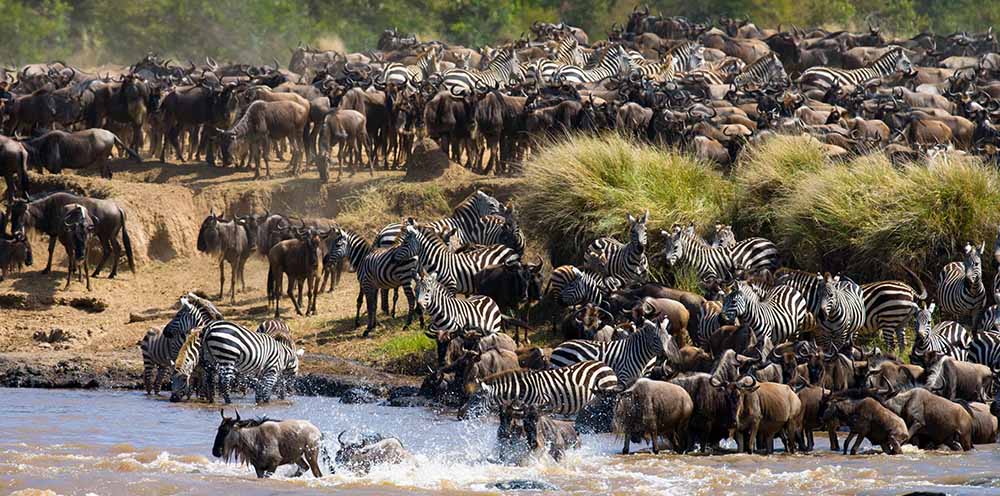
As the dry season approaches, the herds begin their journey north toward the Mara River. This phase, usually between July and October, delivers the most iconic moments of the migration. Massive groups gather at the riverbanks, hesitating before making the dangerous crossing.
Suddenly, one animal leaps forward, and thousands follow. Crocodiles lurk beneath the surface, while strong currents threaten the weaker members of the herd. Despite these dangers, the instinct to survive pushes the animals across. Therefore, river crossings provide unforgettable scenes that define the Great Migration.
Although the migration extends into Kenya, Tanzania hosts the majority of this natural event. The Serengeti National Park offers vast, open landscapes that allow visitors to observe the movement in its purest form. Moreover, fewer crowds compared to other regions create a more authentic safari experience.
In addition, Tanzania provides diverse viewing opportunities throughout the year. While the southern plains showcase calving season, the central Serengeti offers consistent wildlife sightings even outside peak migration periods. Therefore, travelers can enjoy remarkable safaris regardless of timing.
Timing plays a crucial role when planning a safari. For instance, visit between January and March to witness calving season. Alternatively, choose July to October if you want to experience dramatic river crossings. Meanwhile, the months in between still offer excellent wildlife viewing with fewer tourists.
Because the migration never truly stops, each season delivers a unique perspective. Consequently, every visit feels different and exciting.
The Great Migration with Beyond Travels offers more than just a wildlife spectacle. It tells a powerful story of endurance, instinct, and the delicate balance of nature. Whether you watch newborn calves take their first steps or witness herds braving crocodile-filled rivers, every moment leaves a lasting impression.
Ultimately, this natural phenomenon reminds us of the raw beauty of the wild. Therefore, if you seek an unforgettable safari experience, the Great Migration should stand at the top of your list.

No worries! Every package we offer is simply a starting point, as we know each traveler has unique needs. Reach out to us through our inquiry or contact form, and we'll craft a personalized safari experience just for you.